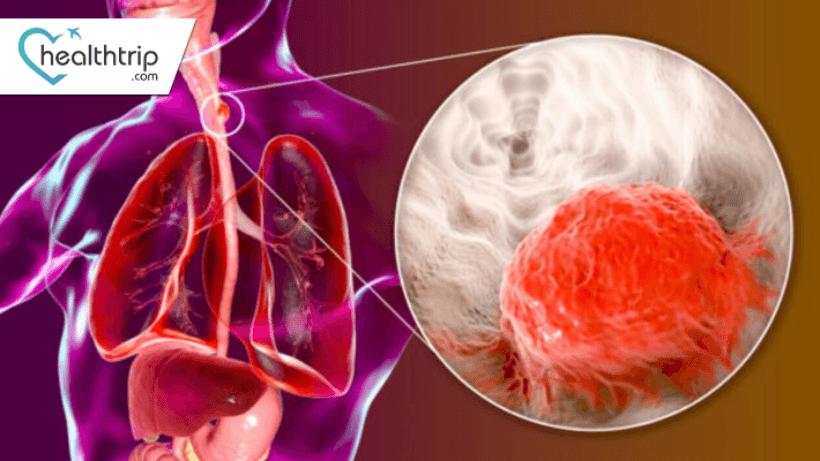
TEP pour le cancer de l'œsophage : diagnostic et stadification
13 May, 2023
 Docteur. Divya Nagpal
Esophageal cancer is one of the most aggressive cancers and its diagnosis and staging are essential for proper treatment. PET scan is a non-invasive imaging technique that is used for diagnosis, staging, and monitoring of esophageal cancer. PET scan provides detailed information about the size, location, and extent of cancer in the body, which helps doctors in making a treatment plan for the patient. In this blog, we will discuss the PET scan for esophageal cancer in detail.
Understanding Esophageal Cancer
Procédures les plus populaires dans Inde

Esophageal cancer is a type of cancer that affects the esophagus, which is the tube that connects the throat to the stomach. The main types of esophageal cancer are squamous cell carcinoma and adenocarcinoma. Esophageal cancer is often diagnosed at an advanced stage when it has spread to other parts of the body. Therefore, early detection and staging are essential for effective treatment.
What is a PET scan?

Soins de bien-être
Donnez-vous le temps de vous détendre
Prix les plus bas garantis !

Prix les plus bas garantis !
Positron Emission Tomography (PET) scan is a medical imaging technique that uses a special dye containing radioactive tracers to create images of the inside of the body. PET scan can detect changes in cellular activity and metabolism, which can indicate the presence of disease, including cancer. PET scan is a non-invasive procedure that does not involve any incisions or surgery.
PET Scan for Esophageal Cancer
PET stands for positron emission tomography, which is an imaging technique that uses a small amount of radioactive material to create detailed images of the body. PET scan is often used in combination with other imaging techniques such as CT scan, MRI, and ultrasound.
How PET Scan Works?
608 patients de Inde choisir ce forfait pour leur Forfait transplantation hépatique

In PET scan, a small amount of a radioactive substance called a tracer is injected into the patient's body. The tracer is usually a form of sugar, such as glucose, which is taken up by cancer cells faster than normal cells. The tracer emits positrons, which interact with electrons in the body, resulting in the emission of gamma rays. These gamma rays are detected by a PET scanner, which creates a three-dimensional image of the body.
PET Scan Procedure
Before the PET scan, the patient is advised to avoid eating for a few hours. The patient is then injected with the tracer and asked to rest for about an hour to allow the tracer to spread throughout the body. The patient is then placed on a PET scanner, which takes about 30 minutes to create a detailed image of the body.
Benefits of PET Scan for Esophageal Cancer
PET scan has several benefits for esophageal cancer diagnosis and staging.
- PET scan provides detailed information about the location, size, and extent of cancer in the body, which helps doctors in making a treatment plan.
- PET scan is a non-invasive imaging technique, which means that it does not require any incisions or surgery.
- PET scan is a relatively quick procedure and the patient can return to normal activities immediately after the scan.
Limitations of PET Scan for Esophageal Cancer
PET scan has some limitations that should be considered.
- PET scan cannot differentiate between cancer and inflammation, infection, or scar tissue.
- PET scan may not detect small tumours or tumours with low metabolic activity.
- PET scan may produce false-positive or false-negative results, which may require further testing.
PET Scan for Esophageal Cancer Staging
Esophageal cancer staging is the process of determining the extent of cancer in the body. Staging helps doctors in making a treatment plan for the patient. PET scan is often used for esophageal cancer staging, along with other imaging techniques such as CT scan and endoscopic ultrasound.
PET scan Procedure
Before the PET scan procedure, the patient is injected with a small amount of radioactive tracer, which is absorbed by the body's cells. The tracer is typically a form of glucose that is absorbed by cancer cells more rapidly than normal cells, making it easier to detect. The patient is then placed on a table and moved through a large circular scanner, which detects the radioactive tracer and creates images of the inside of the body.
The PET scan procedure is relatively quick and typically takes about 30 minutes to complete. The patient may be asked to avoid eating or drinking for several hours before the procedure to ensure accurate results.
Stages of Esophageal Cancer
Esophageal cancer is staged using the TNM system, which stands for tumour, lymph nodes, and metastasis. The stages of esophageal cancer are:
- Stage 0: Cancer cells are only in the inner layer of the esophagus.
- Stage I: Cancer cells have spread beyond the inner layer of the esophagus but have not spread to nearby lymph nodes or other organs.
- Stage II: Cancer cells have spread to nearby lymph nodes or tissues, but not to distant organs.
- Stage III: Cancer cells have spread to nearby organs and lymph nodes.
- Stage IV: Cancer cells have spread to distant organs such as the liver, lungs, or bones.
PET Scan for Esophageal Cancer Staging
PET scan is used for esophageal cancer staging to determine the extent of cancer in the body. PET scan can detect cancer cells in the lymph nodes and other organs, which helps in determining the stage of cancer. PET scan is often used in combination with other imaging techniques such as CT scan and endoscopic ultrasound for accurate staging of esophageal cancer.
Conclusion
PET scan is a non-invasive imaging technique that is used for the diagnosis and staging of esophageal cancer. This procedure provides detailed information about the location, size, and extent of cancer in the body, which helps doctors in making a treatment plan for the patient. However, PET scan has limitations, such as false-positive or false-negative results, which can lead to inaccurate diagnosis and staging of esophageal cancer.
To address these limitations, PET scan is often used in combination with other imaging techniques, such as CT scan or MRI. CT scan provides detailed information about the anatomy of the esophagus and surrounding tissues, while PET scan provides information about the metabolic activity of the tissues. This combination of imaging techniques can help doctors in accurately diagnosing and staging esophageal cancer.
In summary, PET scan is a valuable tool for the diagnosis and staging of esophageal cancer, but it has limitations that should be considered. Using PET scan in combination with other imaging techniques can increase the accuracy of the diagnosis and staging of esophageal cancer, leading to better treatment outcomes.
Forfaits bien-être les plus populaires





Blogs associés
Tourisme médical en Inde: Tout ce que vous devez savoir - 2025 Insights
Explorez le tourisme médical en Inde: tout ce que vous devez savoir

Top 10 des hôpitaux en Inde pour la chirurgie cardiaque - 2025 Insights
Explorez les 10 meilleurs hôpitaux en Inde pour une chirurgie cardiaque –

Tourisme médical des Maldives à l'Inde: Guide complet - 2025 Insights
Explorez le tourisme médical des Maldives à l'Inde: Guide complet –

Les voyages médicaux sont-ils sûrs
Explorer la sécurité des voyages médicaux
Transplant de cheveux en Inde: coût, cliniques et résultats - 2025 Insights
Explorez la greffe de cheveux en Inde: coût, cliniques et résultats –

Meilleurs hôpitaux de cancer en Inde pour les patients internationaux - 2025 Insights
Explorez les meilleurs hôpitaux de cancer en Inde pour les patients internationaux –